The Lawn Locked Yard
Three lawn lost friends: New England aster (Symphyotrichum novae-angliae)
Spring Doldrums
Something didn’t feel right this spring of 2013. It was funky weather; rainy and cool. I didn’t feel
in the mood to grow vegetables as I have done since moving into the house in 2003. I was feeling
pissy, just like the weather. The pile of frustrations of too much work and not enough time to do
everything that I needed or wanted to do was making me harried. The thought of the task ahead to
shop for plants and maintain a veggie garden was too daunting. To add to my frustrations, the
weather seemed to cause the delay in the emergence of my garden and made me think that the
synchronous pattern of flowering and arrival of pollinators might be a little off kilter this year…
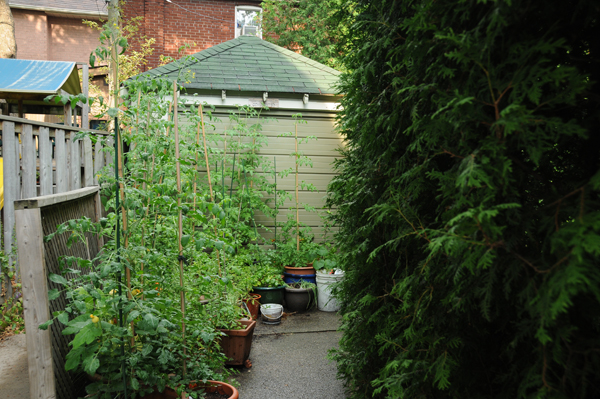
The usual set up: the vegetable garden on the driveway.
The real clincher was the state of the driveway. It is a shared driveway, so technically one can
park temporarily to off load, but the vehicle cannot remain parked. Early on, the scarcity of street
parking drove me to apply for a permit for a driveway widening which meant I had to give up some
lawn. Quel dommage! The real shame was not losing the lawn, but losing the potential planting site
for native plants. Little did I know that I would lose the planting site only temporarily…sort of
(spoiler alert?).
Original lawn intact. Pre-driveway widening.
I fretted about the state of the driveway. I was told by the installer that I should maintain the
driveway to keep out “weeds”. He recommended a special sand with polymer that would almost be like
concrete after it was applied, misted and left to harden.
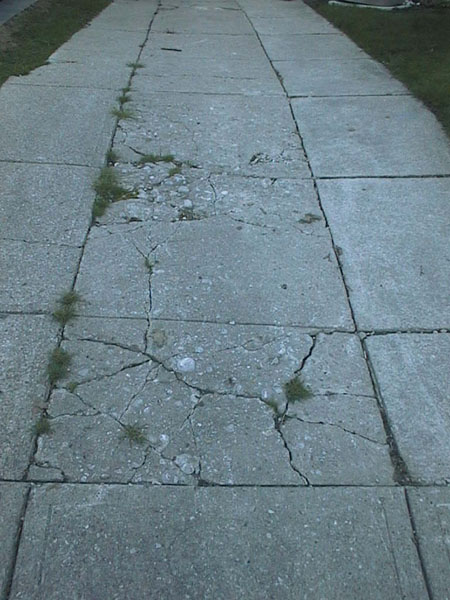
The original driveway before removal of middle section. Cracked concrete was replaced with
pavers.
Fine, that worked for a couple of years. Then, I had to reapply the treatment. After performing this
task a few times and letting the maintenance slip, the “weeds” appeared in full force. I would pull
them out each time, reapply the treatment and hope for the best.
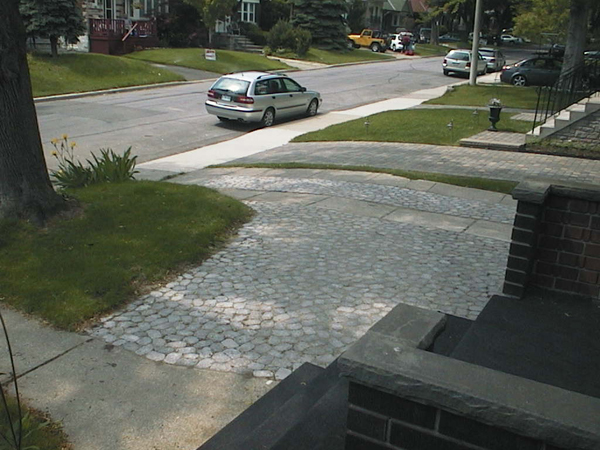
The new driveway (widening and middle section of main drag) with pavers replacing lawn and
concrete slabs, respectively.
This year, I let things get out of hand and the weeds grew taller and more robust. They were the
usual mixture of dandelion, chickweed, creeping bellflower, plantain, grasses, etc. Then, I noticed
something amongst the weeds – goldenrod. Crushed leaves of tiny plants smelled like anise hyssop.
Fuzzy leaves stood out and some finer, taller plants emerged.
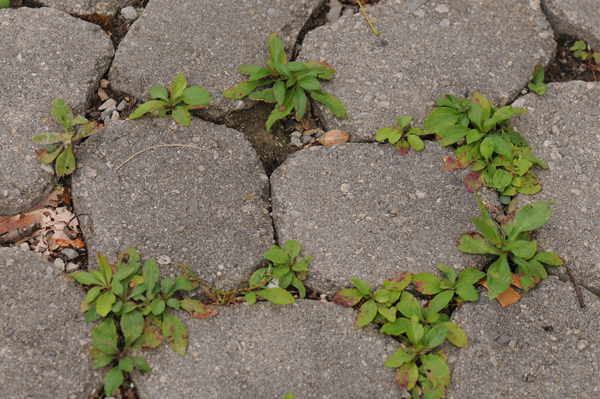
The majority of the colonizers were Canada goldenrod (Solidago canadensis) except the far left,
New England aster (Symphyotrichum novae-angliae).
Clearly, the landscape had changed.
File Under: What I did last summer
I can reflect on it now, but at the time it was very disconcerting. All this angst for what? The
answer was staring me in the face! Don’t fight it! Go with your gut feeling. It’s only a year lost
if it doesn’t work out. I did enjoy growing my own produce, but with the influx of local farmers’
markets in the last few years, some of the pressure has been taken off me. Why not take the driveway
that is the sunniest locale and transform it from the tomato-basil-various herb garden to a very
small scale native plant nursery? It was already established.
I’ve always had plants on the driveway but not in the driveway. This was a new concept.
Heath aster (Symphyotrichum ericoides) was able to rise above it all.
Indeed! I had lost my mind or my priorities had changed.
Why didn’t I think of this before? Take the far flung progeny of those living on the edge and bring
them back into the fold! Pluck them from the driveway when they are small and grow them until they
are more robust. Even though selective pressure meant the stronger ones survived the rigours of the
drought-like conditions of the driveway, they would be watched, tended to and protected so they
would not succumb to harm.
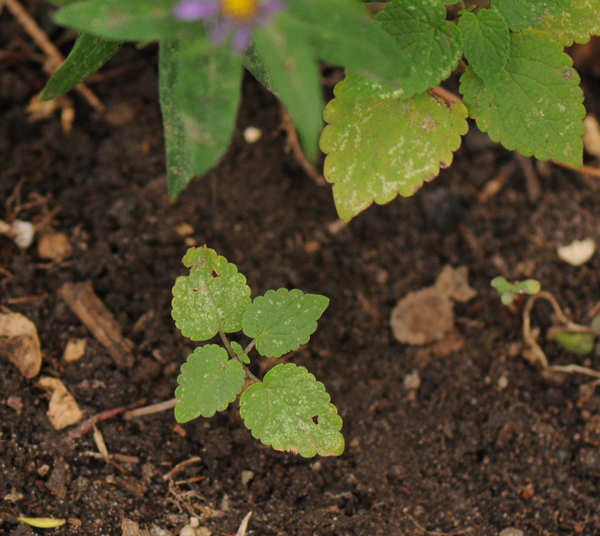
Anise hyssop (Agastache foeniculum) grows easily from seed. Sometimes the tiny seeds fall
next to the original plant and many go further afield…or a-driveway.
I was going to have a home grown nursery whether I liked it or not. I had switched from veggie
garden to growing for wildlife. It was going to be an experimental set up. As a bonus, I could save
a little money by growing for my own infill projects.
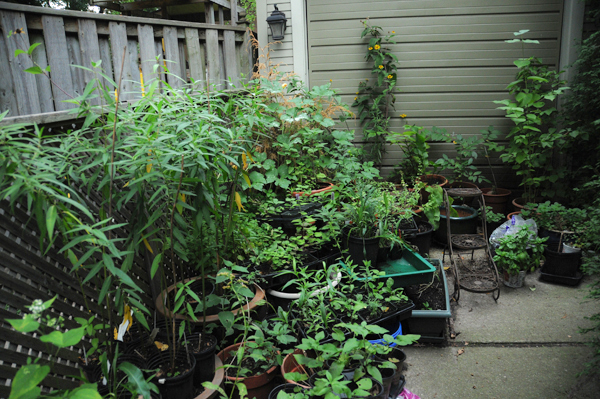
The spring of 2013 and everything changed. The new situation: a mixture of a few edible herbs
and purchased plant sale material and relocated plants for home and restoration.
I couldn’t waste the plants and initially thought I’d take them all to the NANPS AGM plant sale in
the fall or even hold on to them until spring for the NANPS plant sale or for the restoration
project at U of T. I knew the provenance of the wild stock plants, so I felt comfortable about
offering them up or putting them into my small restoration project.
Note: none of the native plants could have come from my neighbours except maybe goldenrod
(repatriating?) which I did not pull up to pot.
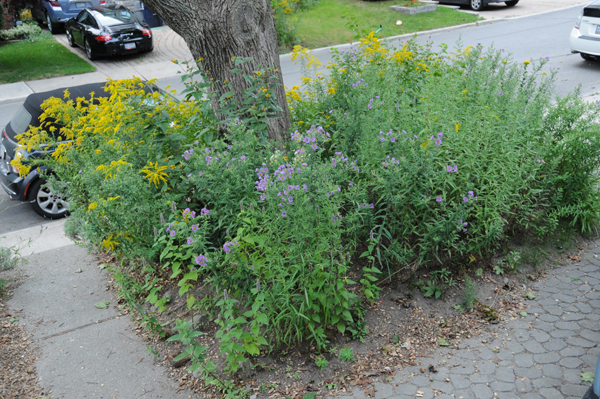
The Native Plant Source (note: most of the white asters had not begun to bloom).
Lawn Locked
Landlocked usually refers to a country that doesn’t have direct access to the sea or ocean and must
rely on good relations with neighbouring countries to keep the flow of goods. Well, in a way, it
describes my situation, but in the sense that my naturalistic habitat is confined by the borders of
other properties with lawn and other exotic plants. My garden is shut in completely, or almost
completely, by lawn: a lawn locked yard. Movement of plant material; genetic material is very
restricted. Not many “openings” exist to take my emigrants due to lawn. And I doubt that they would
be welcome in this most inhospitable environment.
I wouldn’t feel guilty if an opening existed and my plants invited themselves to establish. I have
to fend off unwanted invasive plants, including the seedlings of the hibiscus, Rose of Sharon. There
is a lot of unintentional seed bombing and plant swapping going on. If you don’t want it in your
yard, you have to be vigilant.
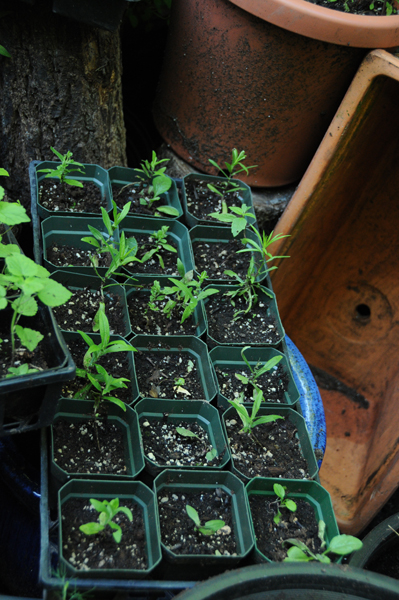
Relocated plants with most starting out in 4” pots.
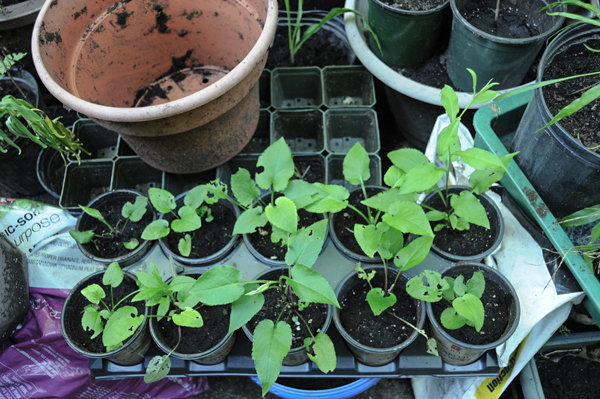
Arrowleaf aster (Symphyotrichum urophyllum) grew quickly and vigorously and needed to be
re-potted. Not all survived. Better to rescue after a good rainfall to soften the soil.
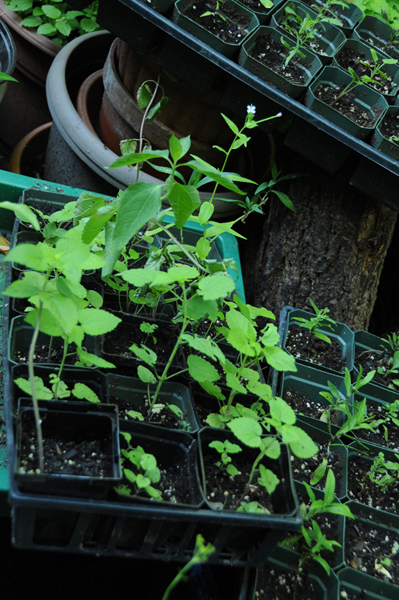
Potted trays of arrowleaf aster (Symphotrichum urophyllum), anise hyssop (Agastache foeniculum), New England aster (Symphyotrichum novae-angliae). A few false sunflower (Heliopsis helianthoides) were also relocated after being too close to the edge.
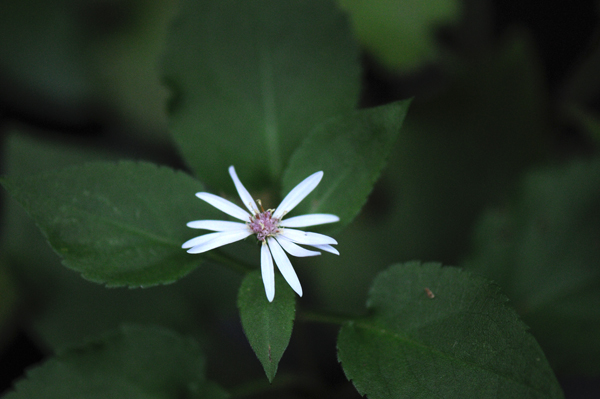
Success! A flowering arrowleaf aster (Symphotrichum urophyllum)
By straying into the interlocking driveway, my garden was telling me it was feeling hemmed in and
was mature enough to move on.
Stealth moves by my plants
My plants have taken advantage of me and of my loosely-interlocking driveway; a semi-permeable
substrate that allows infiltration of rainfall but also allows the establishment of plants. I’m
fully complicit. How about the neighbours? How would they feel?
The neighbours across the street removed part of their lawn to put in a garden. As soon as the lawn
was removed, it became open season for anything to move in. This would become fertile ground for the
invasion of native plants from my yard. Of course by definition, my plants are free from the
“invasive” definition. By definition, a native plant is not invasive. They can be colonizers and
they can be aggressive enough to out-compete other native plants. I’m sure the neighbour also had to
contend with real invasives (exotics), too. However, the gardener in the family goes away each
summer which allows my plants time to blend in with the original plants. So far, they have grown
under the radar.
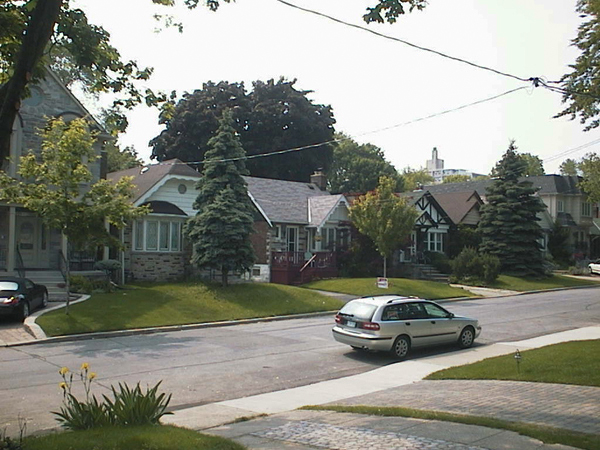
Directly across the street – lawns.
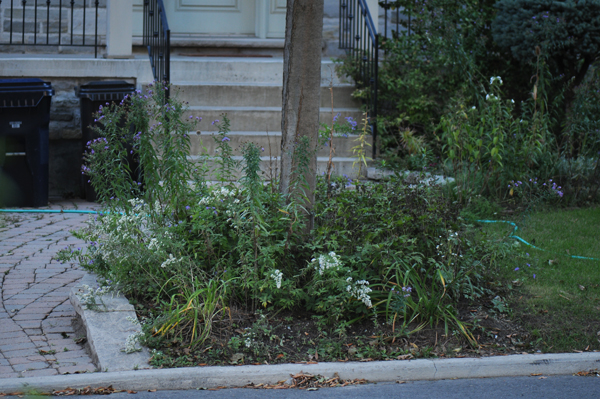
Infiltration station: a great place to start a native plant family.
I don’t believe that my plants will go much further. The other neighbours are too vigilant.
And I’m not tempted to dig up “my” plants that have taken flight across the road. I’ve set them free
to go where they will go. Besides, from afar, I enjoy viewing the New England aster, goldenrod and
white asters that have established. Natural seed bombing!
Mystery plant
Knowing what you have really helps and it becomes quite easy to recognize certain species by leaf
shape even when they are only ½” tall, like hyssop. The scent gave it away ( I also had lemon balm
which can look similar). Other easy ones to identify include New England aster with its clasping
leaves and hairy stems. I don’t have smooth aster…yet (Symphyotrichum laeve) and it is too
dry for the swamp aster (Symphyotrichum puniceum) which is growing in back.
But what do you do about a plant you don’t recognize?
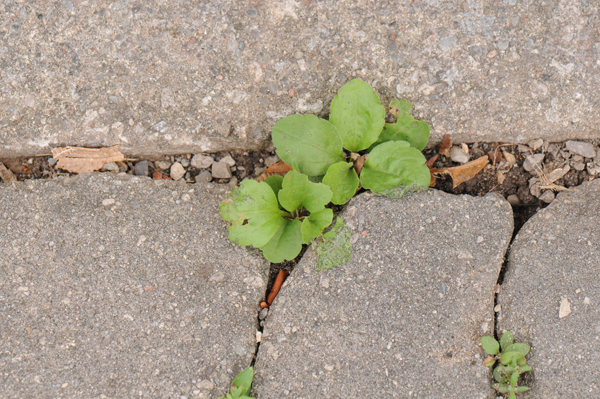
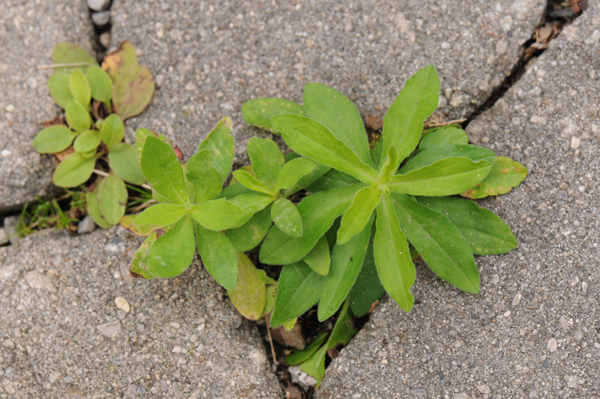
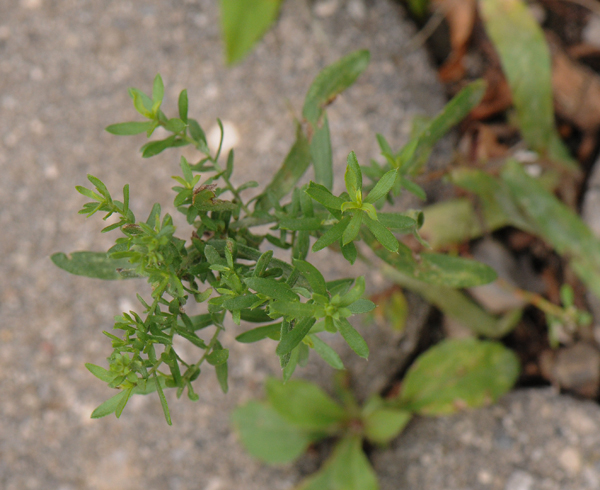
Mystery plant in cracks between driveway stones. Similar to Robin’s plantain (Erigeron pulchellus), one of the fleabanes, but without being as fuzzy-leafed.
I’ll have to be patient and wait until it produces more leaves or flowers next year.
I’m hooked on free plants and mysteries. I may continue this venture next year.
Originally published September 26, 2013 on Native Plants and Wildlife Gardens
Comments

Ginny Stibolt says
September 26, 2013 at 11:04 am
September 26, 2013 at 11:04 am
Janet, what a fun post. And it’s important to point out how sterile those lawns are. My motto on
volunteers is “Let them grown until you know.”
Ginny Stibolt recently posted..The Eagle has Landed, Fall Gardening, and more…

filippine says
September 27, 2013 at 8:50 am
September 27, 2013 at 8:50 am
Hi Janet,
I keep the driveway clean by spraying it with vinegar a couple of times. Everything I consider interesting I pull out before spraying and plant in the area that was once lawn but has now changed into a huge beautiful garden. It is a bit of work but in the end it saves you mowing costs and the plants are free.
I keep the driveway clean by spraying it with vinegar a couple of times. Everything I consider interesting I pull out before spraying and plant in the area that was once lawn but has now changed into a huge beautiful garden. It is a bit of work but in the end it saves you mowing costs and the plants are free.
Also the driveway is spotless, which somehow works together with the wild character of the garden,
and gives it a tended feel, good, especially if your neighbors are concerned about the appearance of
the neighborhood.
Native Plant Species Articles Index
The Following articles were originally published on the Native Plants and Wildlife Gardens website.