Hellish Heliopsis
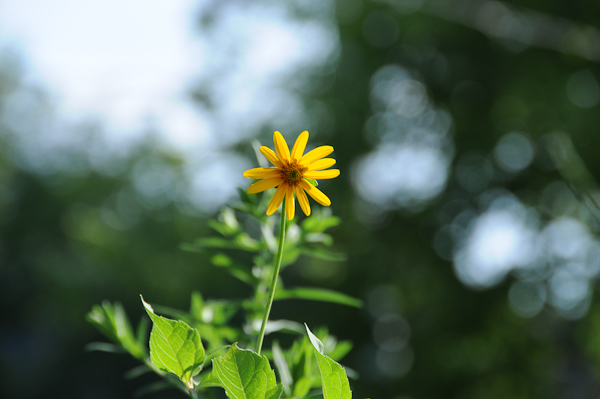
Does this look like the face of a bully?
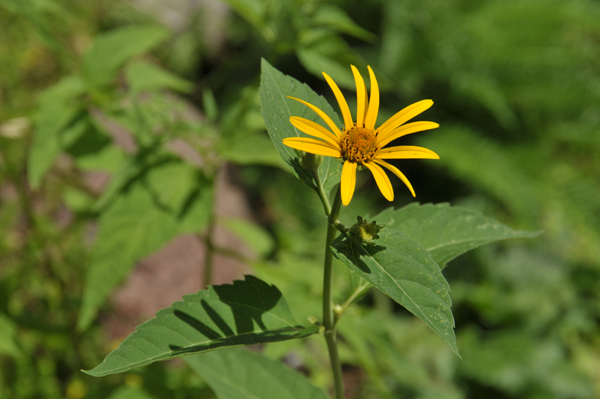
It looks innocent enough.
A is for aggressive.
B is for bully.
C is for colonizer.
The ABC set of descriptors are synonymous with invasive species. Invasive species are very
successful exotics, i.e., colonizers that have been for the most part released of what keeps them in
check. They are damaging to the environment.
But the ABCs could also be easily ascribed to a number of native species, too. And it is those
species that we have to be careful about when gardening, particularly in a small garden on the
boulevard. It really pays to research what you introduce and invite to stay as a resident in your
garden.
Besides dealing with the usual parameters in your garden: type of soil (fine to coarse), light level
(sun/shade), and moisture regime (dry to wet), other considerations should include height and
spread. Proportion is important. In a small garden, a couple of really large plants will only
emphasize how small the garden is. Even though in your mind your garden is limitless, reality hits
when the clearly defined limits to your plantings are laid out – when the garden meets the house,
driveway, paths, fences, or roads. Although, sometimes these limits are ignored to varying degrees
by both plants and people. Everyone has seen houses and fences engulfed by vines and plants spilling
out across sidewalks.
I don’t have a prairie or a meadow, but I would like to have some semblance with native plants
appropriate to the site which is partly sunny and very dry owing to the boulevard slope and the
Norway maple which sucks every bit of moisture from the earth.
A small patch of goldenrod came with my property, so as it spread, I’ve had to pull it to keep it
under control, which is very easy to do. Now, my New England aster has established and is moving
closer to the sidewalk, so it too, gets pulled on occasion. I don’t need to incur the wrath of
neighbours and then bylaw officers.
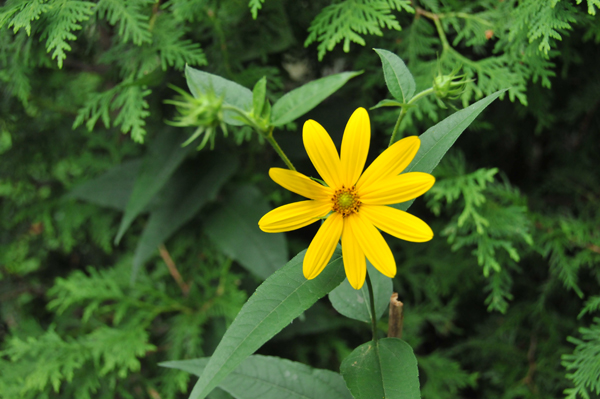
The sunny disposition of the woodland sunflower (Helianthus divaricatus).
Native Sunflowers – True or False?
I like sunflowers and other asters like cup plant (Silphium perfoliatum), but at 3.5 m (about
12 ft.) and a wide root-print, my front garden would have consisted of a large, aging Norway maple,
the dominating feature, and a couple of mammoth cup plants – not a great scenario proportion-wise or
when one is trying to maximize a wildlife garden for 3 seasons, i.e., succession in flowering. The
4th season usually buries the garden when the accumulation of snow is shovelled and piled in the
only viable spot which is at the base of the tree.
I had success with a woodland cousin, a true sunflower (Helianthus divaricatus), which seemed
well behaved along an edge in the backyard under the cedars.
Why not try a false sunflower?
According to the fact sheet from the
USDA plant database fact sheet
smooth oxeye or false sunflower (Heliopsis helianthoides) grows a little over a metre (3 to 4
feet). Also, it has no serious insect or disease problems. But, it has been observed to have some
susceptibility to aphids.
So, I settled on two plants.
In reality, sometimes plants don’t follow the script. Not only did they grow quite well on an
unforgiving site, they thrived like crazy, reaching 2 m (6.5 ft.).
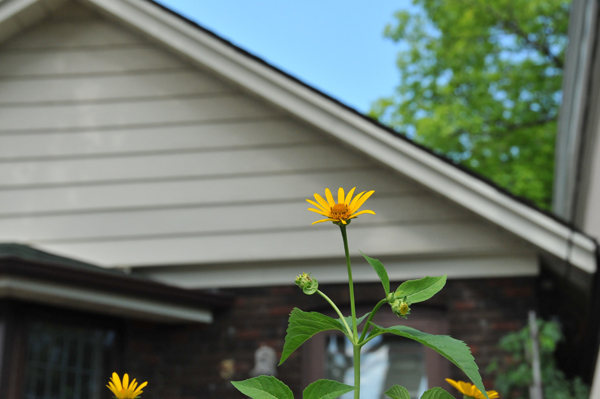
No, they are not quite as tall as a house, but they sure like to reach high for the sky.
I guess I missed the part about its tendency to become weedy in landscapes. They built up enough
nerve to spread both by rhizomes and seed.
After a couple of years, I found it to be thuggish. It started to bully other plants, even those
that are aggressive themselves!
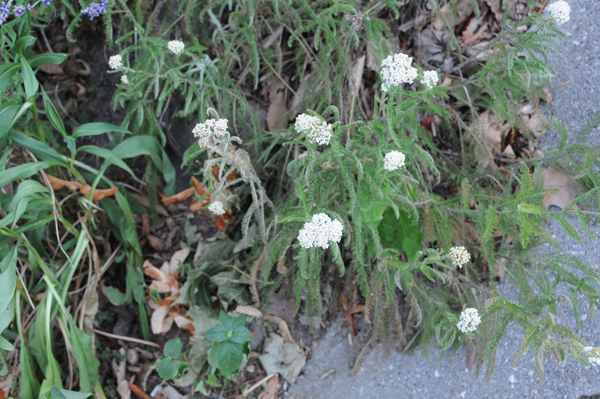
Common yarrow (Achillea millefolium) before it started to disappear. It’s still barely
hanging in.
The bully bullies another bully. Was the yarrow getting pushed out? Apparently, it is an aggressive
plant, too. According to the
USDA fact sheet
it likes poor, well-drained soil. But to prolong its relatively short life, they have to be divided
every other year and planted 12-18 in. apart.
Out of Control?
Yes, but not right away. Like invasive plants, sometimes aggressive native plants can fly under the
radar for a couple of years and then sneak up on you later, popping up everywhere. I planted two
smooth oxeye in 2007 and they behaved themselves for a number of years. Little did I know they were
building up reserves in their roots and conspiring to invade the rest of the garden.
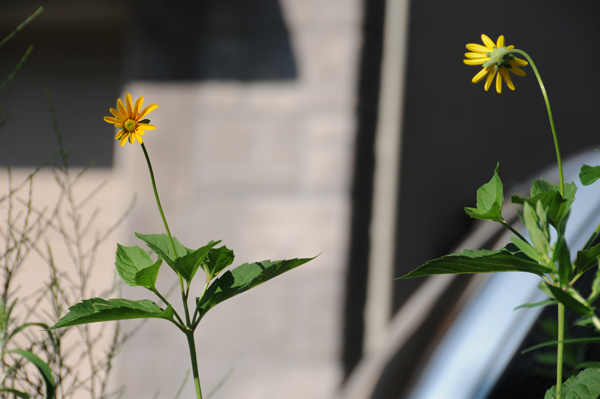
Rogue sunflowers: offspring from the original plantings join forces and conspire to take over
(Heed the clues. Clue #1: they both should be facing the same way towards the sun. But note they
are looking in different directions – a dead giveaway that they are plotting to move and take
over).
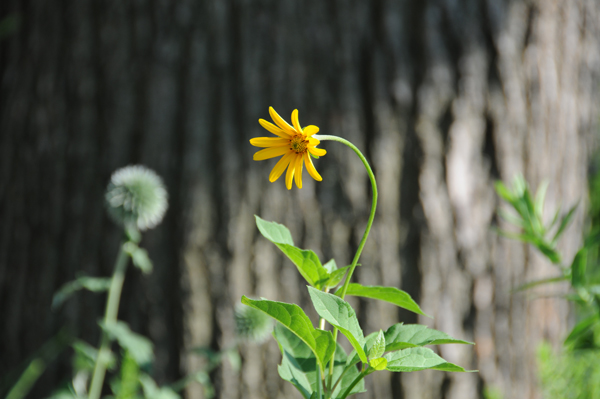
The “Triffid” looks for more real estate.
Smooth oxeye moved itself from two places I put it and seeded everywhere because I didn’t deadhead
it. It started to bully by stealth and targeted the weaker push-overs. It pushed out a few of my
plants like horsemint and pearly everlasting. And then it started to push out my whorled milkweed
and yarrow. That was enough! I needed to take control of the situation before I ended up with a
monoculture of sunflowers towering over the sidewalk, or worse, falling all over themselves on the
sidewalk after a hard rain.
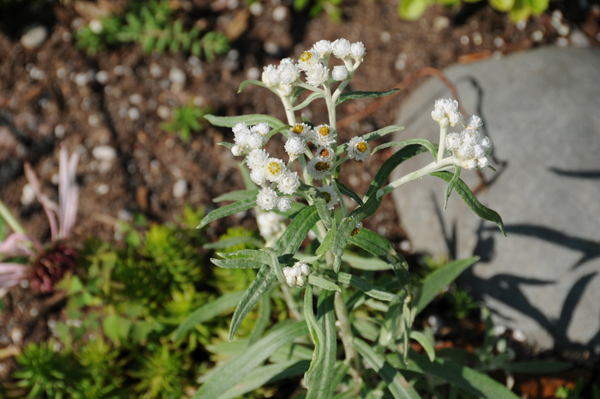
Pearly everlasting (Anaphalis margaritacea) didn’t have a chance.
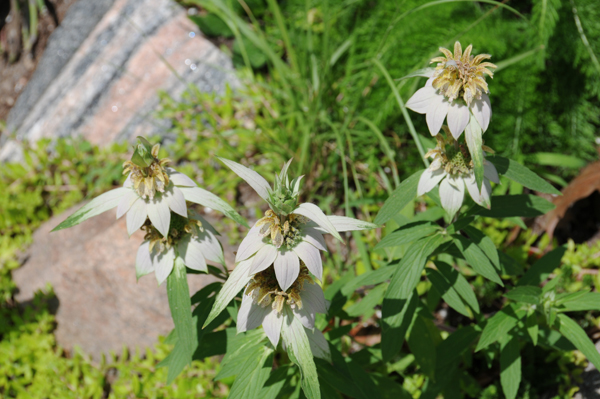
Spotted beebalm or horsemint (Monarda punctata) was crowded out.
The whorled milkweed is skinny enough to evade the pushy tactics of false sunflower. A deep taproot
might help it side step the ever-expanding root ball of the sunflower. It’s hanging on and doing
better now that the sunflower has been evicted. However, it did lose the support of the rigid stems
of the sunflower and now tends to flop over. The introduction of some new plantings of other robust
native species should help keep the milkweed as an upstanding citizen in the garden.
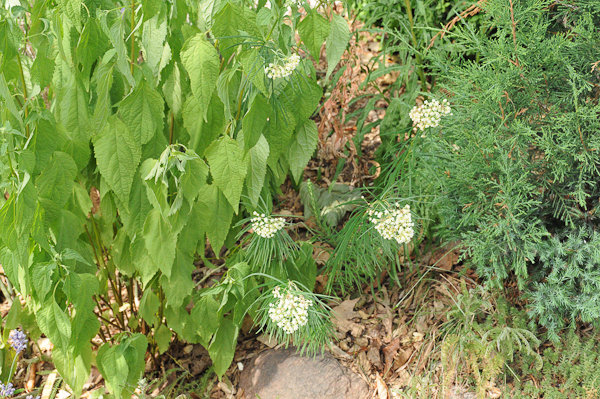
Another drought tolerant plant, whorled milkweed (Asclepias verticillata) pokes out from behind
bully false sunflower (left).
Consolation Prize
Everything is not going to hell in a hand basket. False sunflower has its good points, if you
can get a handle on its thuggishness.
It’s a tall, erect, imposing plant and makes quite the statement. Stems are robust enough to
support other weaker-stemmed plants. Cut stems have a small hollow and might be used by
cavity-nesting insects.
This plant is for you if you are a control freak beyond the usual vigilance with invasive
species (remove as they move in). And if you have fun deadheading, this plant is for you,
too.
It is drought resistant, but it can look very droopy during the heat of the day under full sun
exposure, much like other wide-leaved asters, such as black-eyed susans.
It is a source of pollen, nectar, seeds and habitat for wildlife.
It is one of the earliest flowering sunflowers starting in May and flowering through September,
providing a nectar and pollen source. In my area, it doesn’t bloom until July. I’m sure if I
deadheaded it, I could extend the flowering season beyond August. But there are plenty of other
asters ready to take over the duty of blooming.
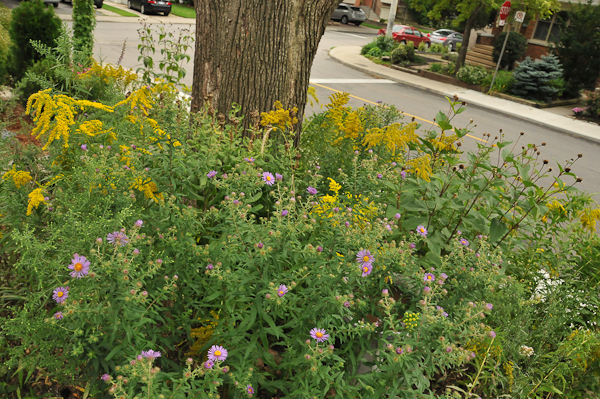
The fall shift of New England asters and goldenrods take over where the frost, heath, sky blue
asters and smooth oxeye have left their flowering shift. Some asters can hold their own with
this aggressive species and actually get along with co-conspirators (note spent heads of smooth
oxeye to the left and right of the tree trunk).
The Wildlife Component
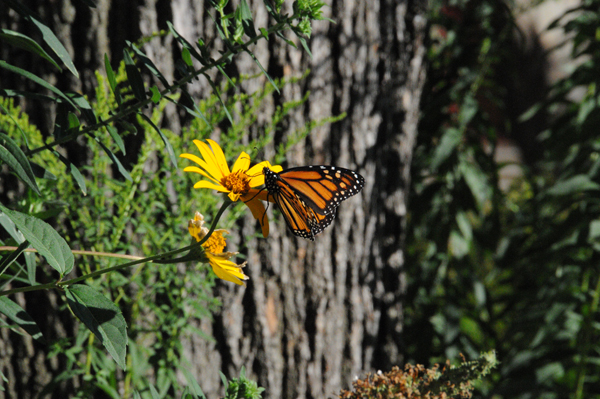
Monarch butterfly feeding on smooth oxeye.
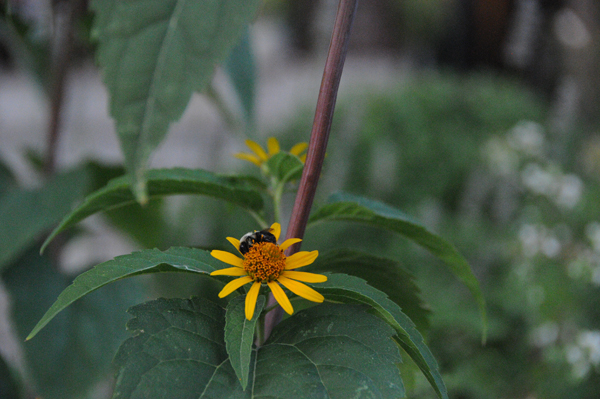
Bumble bee feasting on smooth oxeye (note: main stem reddens in full sun or in the fall for
half-sun situations like this).
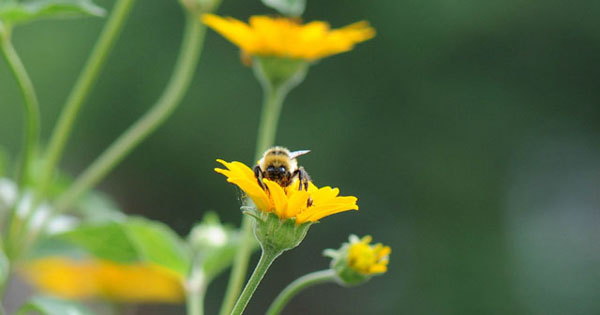
How could I deprive a beady-eyed bumble bee of food?
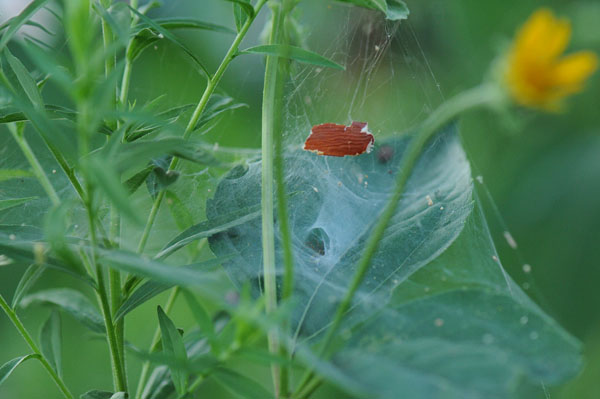
Spider habitat – the parlour is open for business.
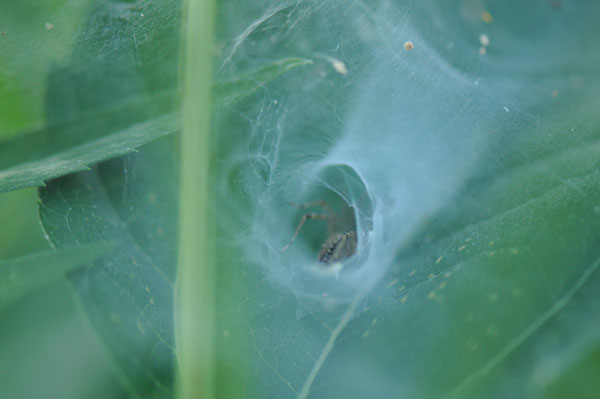
Spider awaits the first client…
Aphid haven?
Is the false sunflower an aphid attractant? I scored the mother lode with aphids coating the entire
top half of main stems in 2010. I was ready to put out a work order for lady beetles. This year the
aphid population was down and I’m not sure if it is related to the high rainfall not stressing out
the plants or making the aphids less thirsty.
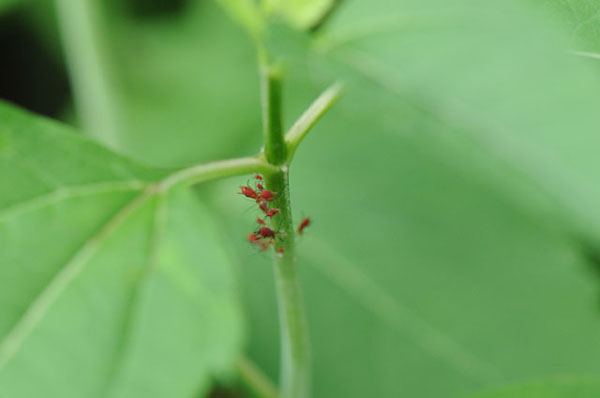
Aphid love-in on false sunflower.
Did I make a mistake in planting smooth oxeye?
Probably – it is not really suited for a small yard, as it is a crafty species, adept at
moving around (Native Plant Wildlife Garden article "My Plants Are Moving" is no longer online.) It’s amazing how much of a crater is left when you remove a large root ball. I have some work
ahead of me to fill it in. I’m inclined to replace the pearly everlasting and horsemint and add more
Liatris spp.
However, I won’t take out all the smooth oxeye. I’ll keep a couple of clumps to tower over the other
asters of even-height.
I’m going to keep the smooth oxeye as a source of seedlings for guerrilla gardening. Wouldn’t it be
great to see a slope of false sunflower rather than invasive dog-strangling vine along our local
roadways?
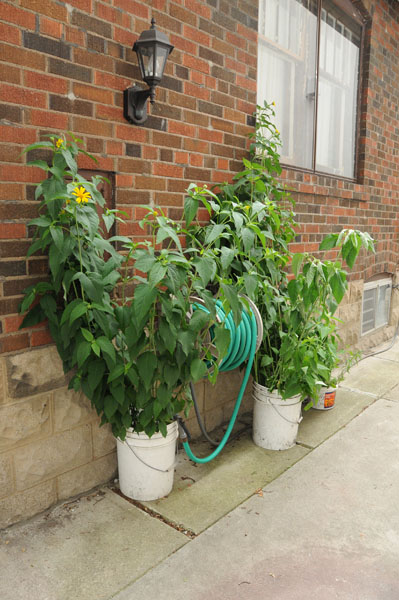
This is what happens to bullies. These guys are destined for a guerrilla gardening site; perhaps
somewhere DSV is taking over a slope.
In retrospect, I should have kept an eye on it and have deadheaded it, but it seemed so conventional
in gardening circles. The whole idea about gardening with native plants is to provide for wildlife.
If I deadhead the flowers, I deprive wildlife of a source of seeds.
Another reason to plant with natives is to reduce maintenance for the gardener. That’s why we choose
the right plant for the situation, so we’re not watering like crazy after the initial establishment
period or constantly pruning or deadheading.
Definitely, if I had a large property with meadows, I would include smooth oxeye as it has many fine
attributes.
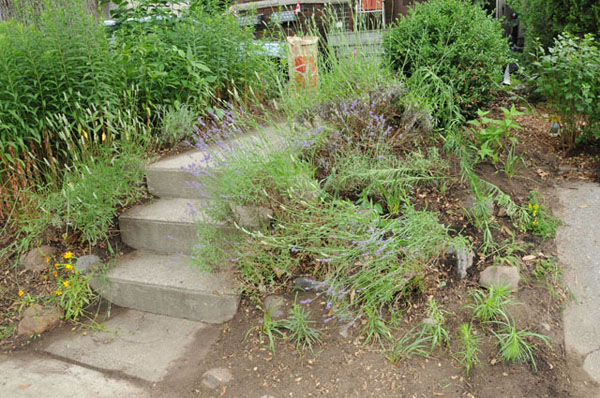
Post-eviction time. Slope without sunflowers and breathing room for other plants.
Heliopsis spp. facts:
About 18 species: Canada, U.S., Mexico, Central America, South America (to Bolivia). Most
Heliopsis spp. are known only from Mexico. According to the USDA plant database there are only
two native Heliopsis spp. H. helianthoides with four varieties has taken most of the continent
while the only other Heliopsis sp. is the mountain oxeye (H. parvifolia) which is confined to
Arizona, New Mexico, Texas, and Mexico (Chihuahua, Coahuila, Durango, Sonora, Tamaulipas). The
Flora of North America elevates one of the varieties to the status of species: H. gracilis.
Links:
Comments

Suzanne Dingwell says
July 27, 2013 at 8:07 pm
July 27, 2013 at 8:07 pm
Janet, loved all the lessons learned with the smooth oxeye! It ‘s blooming madly here in Virginia
right now, too. The problem of over-exuberance is one that I greatly prefer to other alternatives,
but I think I will refrain from planting this one in my teeny tiny plot. You have done to much to
beautify your city spot, I hope the passersby give you lots of compliments!
Reply

Janet Harrison says
July 28, 2013 at 10:55 am
July 28, 2013 at 10:55 am
Thanks, Suzanne. I know that you can relate. It’s been quite a transition for you moving from a
large property to a tiny plot, even smaller than mine. (Native Gardeners Never Give Up).
It’s a whole re-adjustment in sizing up the space you can
work with and abandoning any thoughts of large expanses of tall plants. You wisely steered away
from the Triffid-sized specimens and chose some beautiful compact plants that will fill in
nicely. The bonus is that you probably won’t have to wait as long as I will to see the results.
One of the few non-natives that I have in the front yard, parallel with the sidewalk is
lavender. I’ve had more compliments about lavender, probably because people recognize it, it’s
an early bloomer (June), and it’s short and thus, not threatening. I did get a few compliments
on the Liastris sp., but only because it had lots of accessories – Monarch butterflies. The
slope to the right of the steps is a bit sparse and looks a bit ratty right now. But, it will
improve once I replant and it fills in. I only hope that my Monarch butterfly friends will
return and reward me for my efforts. They’re my most important critics. :-)
Carole says
July 27, 2013 at 8:27 pm
July 27, 2013 at 8:27 pm
I could have written the same story about Helianthus angustifolius, Swamp Sunflower. This is a
wonderful fall bloomer and has nice dark green leaves in spring and summer, but it spreads
through under ground runners and produces seeds which, like you, I like to leave for the
wildlife.
Reply
Janet Harrison says
July 28, 2013 at 11:08 am
July 28, 2013 at 11:08 am
Carole, you just made me add yet another plant to my want list when/if I move to a larger
property. I love that it is a narrow-leaved species which gives the plant a more delicate,
airy feel, much like sky blue aster compared with the other asters. Quite a change from the
usual sunflowers and their broad leaves. I could always try a pot on the driveway at the
back. If it works to contain mints, it might work for sunflowers.

Ursula Vernon says
July 29, 2013 at 10:13 am
July 29, 2013 at 10:13 am
I hear you, Carole! I had to transfer my swamp sunflower to the pasture, since it was eating my
flowerbed! (Including bee balm! Who knew!?)
Now I’m eying my false sunflower worriedly…

Becky Byrum says
July 30, 2013 at 9:52 am
July 30, 2013 at 9:52 am
Thanks for this article! I love the guerrilla gardening idea and am pretty sure my false
sunflower will be moving to the empty lot next door. I had added it to my butterfly garden but
have been disappointed that the butterflies don’t seem to like it. My garden is always in a
state of flux – great metaphor for life.
Reply
Janet Harrison says
August 1, 2013 at 3:54 pm
August 1, 2013 at 3:54 pm
Becky, it’s always good to have native plants on the move, especially to places that would
otherwise be full of invasive species. I hope your false sunflower takes root next door and
spreads.
I agree – nothing is static for long in a plant community. Our gardens do keep us wondering
and busy trying to keep up.
Re: butterflies. Butterfly counts seem to be down everywhere this year. We were spoiled by
last year’s surge of Red Admirals. I’ve seen very few of any species here (even cabbage
whites) and I know it’s not for lack of trying on our part by having native plants
available. Pesticides and weather have taken their toll. I’m waiting to see if things pick
up in August, but I’m not too hopeful. The bees, especially bumble bees are making up for
it, though.

Nicholas Weber says
July 30, 2013 at 9:53 am
July 30, 2013 at 9:53 am
I have 3 rows of them planted in my prairie seed production area and they sure can be aggressive.
Keeping them together seems to work though since they are left to fight with each other. To keep
them contained, they are bordered by a solid mass of switchgrass on one side and a row of big
bluestem on the other. They seed like crazy, but I collect most of it for planting projects and
donating to people interested in starting with natives. It’s an easy to grow plant that really
improves the confidence level of a novice gardener. Aphids have been a major problem for me this
year as well here in WI.
Reply
Janet Harrison says
August 1, 2013 at 5:10 pm
August 1, 2013 at 5:10 pm
Nicholas, you seem to have found the right combo of community plants that can stand up to false
sunflower. For containment, the three that have worked well for me in one part of the garden are
goldenrod, New England aster and frost aster. Finer-leaved asters, heath and sky blue aster have
to be protected or I’m likely to lose them.
Re: Aphids. It is interesting that I don’t have any aphids on false sunflower in the front yard
this year compared with the past couple of years. The ones that I dug up from the front, potted
and moved to the back have some aphids. I surmise that since we’ve had a lot of rain, the plants
aren’t under the stress of drought, so the aphid population is down. The plants that do have
aphids have been stressed from being ripped out of the ground, potted and moved to a different
location. Perhaps your false sunflowers are stressed by drought and the situation is aggravated
by having a several rows together that allows the winged aphids to migrate to other nearby
plants? Hopefully some insect predators (lady beetles, parasitic wasps, etc.) will help your
situation.

Michelle Banks from RamblingWoods says
July 30, 2013 at 1:04 pm
July 30, 2013 at 1:04 pm
This is all great info for a novice like me..thank you.. I do follow you on FB..
Reply
Janet Harrison says
August 1, 2013 at 4:01 pm
August 1, 2013 at 4:01 pm
You’re welcome Michelle! I follow you and your various journeys as well. I’m envious of your
pond and its residents that keep you distracted from the adversities you’re facing. Nature is
very healing. :-)

Donna@Gardens Eye View says
August 4, 2013 at 6:45 pm
August 4, 2013 at 6:45 pm
I am actually pulling more helianthus from the garden along with goldenrod and Obedient that is another to add to the ABC list…I love them but oh boy are they hard to control.
Donna@Gardens Eye View recently posted..Finding A New Path
Donna@Gardens Eye View recently posted..Finding A New Path
Trackbacks
My Roadside Garden says:
August 31, 2013 at 10:47 pm
August 31, 2013 at 10:47 pm
[…] my last post about aggressive plants, and in particular, a garden thug and ultimate bully –
false sunflower (Heliopsis helanthiodes). I have had to keep a close eye on its progeny so it
doesn’t overwhelm the other asters, some of […]
Native Plant Species Articles Index
The Following articles were originally published on the Native Plants and Wildlife Gardens website.